
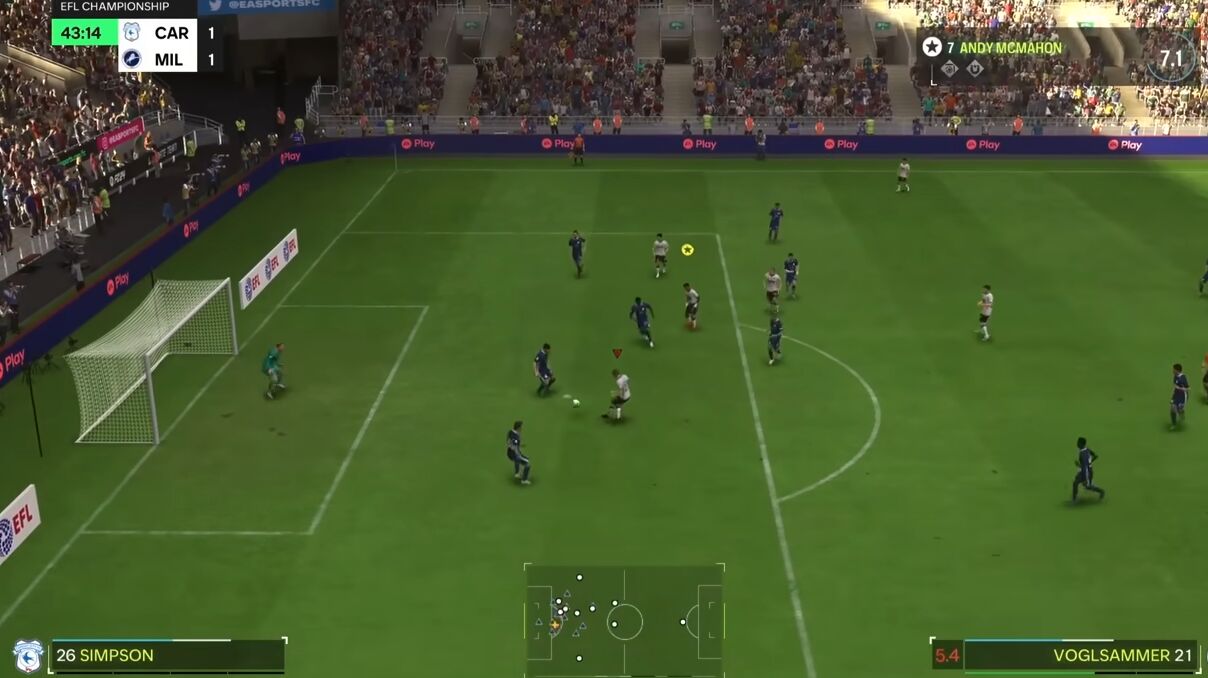
Seeking effective strategies to counter players who dominantly control possession has become a pressing concern. The familiar scenario unfolds—a meticulous dance of ball retention, passing triangles between defenders and CDMs, orchestrated switches between wingbacks and wingers, and a persistent passing game that culminates in a lopsided possession split, typically concluding with a frustrating 60%-40% ratio.
While I’ve incorporated a post-possession loss press into my in-game tactics, the quest for additional techniques to dismantle this possession-heavy style remains elusive. The occasional success in disrupting their play through the press after possession loss tactic provides only a temporary respite, leaving me in need of more nuanced approaches. The Weekend League proved particularly exasperating, with a multitude of opponents employing this strategy, leading me to the brink of insanity.
Acknowledging the limitations of the 71 press and the press after possession loss, I’m in search of a tailored counter that can subvert the meticulous ball circulation orchestrated by these opponents. My typical possession-oriented gameplay involves progressive ball movement, inevitably leading to mistakes. In contrast, these adversaries secure a goal or two before embarking on a tormenting keep-away spectacle for the remainder of the match.
One suggestion proposes abandoning the 71 press and press after possession loss tactics altogether. The idea here is to disrupt the counter for your own tactics. By opting for a balanced 4-4-2, the opponents’ customary strategy of passing between LB and RB loses its efficacy. Introducing a formation with players hugging the sidelines compels the possession-centric adversary to adapt and alter their established approach. The shift disrupts their passing lanes and forces them to engage in a different style of play.
Personally, I adopt a 3-5-2 formation. When confronted with the notorious 71 press, I strategically transition into the possession-heavy style they employ. This serves as a tactical ploy to neutralize their strategy, transforming the match into a coinflip scenario. The objective becomes disrupting their rhythm, a departure from the futile attempt to dominate possession against a well-entrenched opponent.
As the game unfolds, my proactive response to the 71 press entails mimicking the possession-centric approach, thus reframing the dynamics of the match. Outside of this specific scenario, my general strategy revolves around seizing opportunities to win the ball, initiating runs down the flanks, and aiming for well-timed cutbacks. The element of unpredictability becomes crucial in a game where possession-heavy opponents thrive on the predictability of their opponents.
In essence, countering high possession players requires a departure from conventional tactics. Shifting away from the habitual 71 press and press after possession loss strategies, experimenting with formations that disrupt their passing lanes, and strategically adopting possession-oriented play when faced with the same tactics are among the proposed countermeasures. While the challenge persists, the pursuit of alternative strategies provides a glimmer of hope for those, like me, seeking respite from the relentless keep-away torment of possession-dominant opponents. I will use FC 24 Coins to continually improve my team and players, allowing tactics and skills to progress.